








How to choose the right circuit breaker
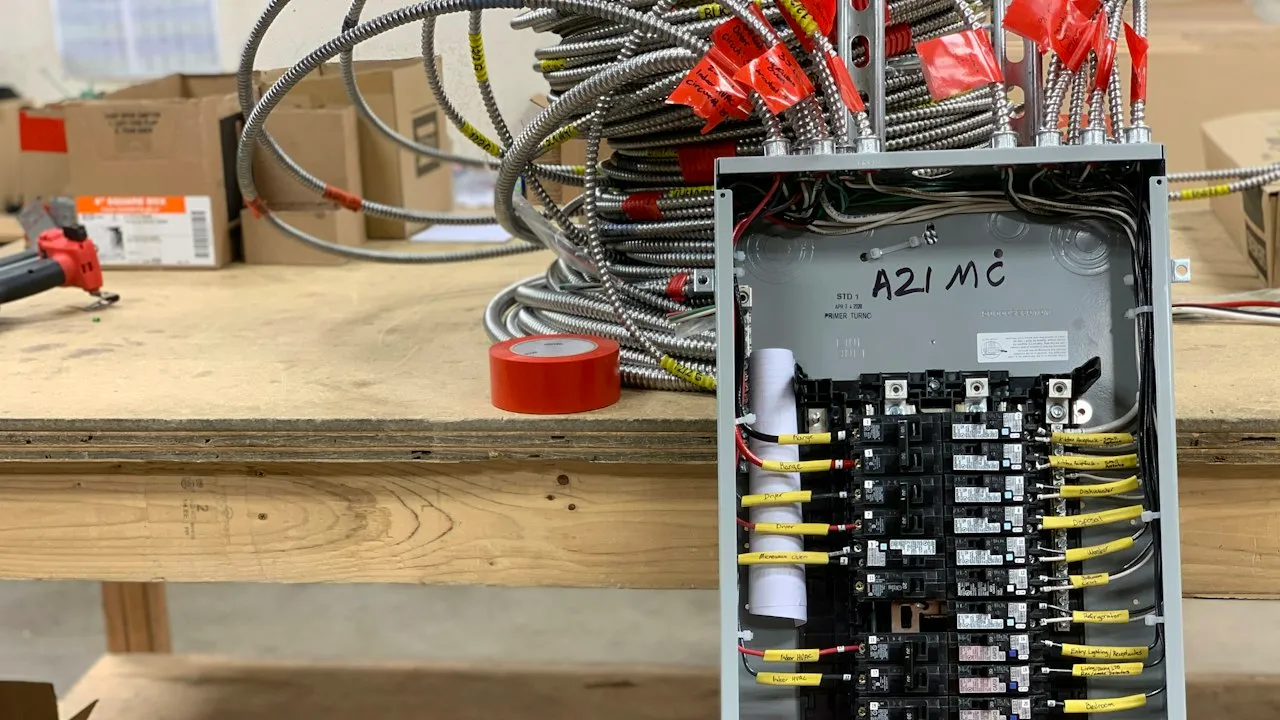
Choosing the right circuit breaker protects your wiring, appliances and household from overloads and faults. The choice is not simply a matter of matching the breaker to an appliance’s wattage. You must consider the circuit design, cable size, expected load, fault current and the type of consumer unit already installed. If you are unsure about any of these factors, a qualified electrician should assess the installation before any work begins.
Start by identifying the circuit you need to protect
A circuit breaker is designed to disconnect power when current exceeds safe limits or when a fault occurs. Before selecting one, establish what the circuit supplies and whether it is intended for lighting, sockets, a cooker, a shower, an outbuilding or another fixed appliance.
Typical domestic circuits may include:
- Lighting circuits, often protected by 6 A breakers
- Standard socket circuits, commonly protected by 16 A, 20 A or 32 A breakers
- Cooker circuits, often using 32 A or 40 A protection
- Electric showers, which may require 32 A, 40 A, 45 A or higher ratings depending on their power
- Dedicated appliance circuits for boilers, ovens, heat pumps or EV chargers
These figures are only broad examples. The correct rating depends on the cable installation method, circuit length, insulation, grouping with other cables and the likely load. A cable buried in insulation, for instance, may carry less current safely than the same cable clipped directly to a wall.
If you are tracing an existing socket circuit before planning upgrades, How to locate and label phone sockets can also help you develop a clearer approach to identifying and documenting services around the home.
Match the breaker rating to the cable and design current
The breaker’s rated current, shown in amps, must protect the cable rather than merely allow the appliance to run. In electrical design terms, the expected load current must not exceed the breaker rating, and the breaker rating must not exceed the cable’s safe current capacity.
For example, fitting a 32 A breaker to a cable that is only suitable for 20 A can allow dangerous overheating before the breaker trips. Conversely, fitting a breaker with too low a rating can lead to repeated nuisance trips when normal equipment is in use.
Cable size alone does not determine the correct breaker. A 2.5 mm² cable may be used in different ways, and its current capacity can vary considerably according to its location and installation conditions.
You should also allow for realistic usage. A kitchen ring circuit may supply a kettle, toaster, microwave and other equipment at different times. A dedicated radial circuit for a washing machine has a different demand profile. An electrician can calculate the expected design current and confirm that protective devices coordinate correctly.
Choose the correct breaker curve for the connected loads
Most domestic miniature circuit breakers, known as MCBs, are marked with a letter such as B, C or D followed by an amp rating. The letter identifies the tripping characteristic, which determines how quickly the breaker responds to short bursts of high current.
B curve breakers suit many domestic circuits
Type B breakers are common in homes. They generally suit lighting, socket outlets and ordinary domestic appliances with modest start-up currents. They trip rapidly when a significant fault occurs while tolerating normal short-term variations in demand.
C curve breakers can suit higher inrush loads
Type C breakers tolerate a larger temporary current surge before tripping. They may be used for circuits with motors, pumps, refrigeration equipment or certain workshop tools. However, a Type C device requires a suitable fault current level to disconnect safely. Replacing a Type B breaker with a Type C model simply to stop tripping is not a safe solution.
A recurring trip is a warning sign, not an inconvenience to override. The cause may be overload, a faulty appliance, damaged wiring or an unsuitable circuit design.
Consider RCD and RCBO protection alongside the breaker
An MCB protects against overcurrent and short circuits, but it does not normally detect current leaking to earth through a damaged cable, appliance or person. Modern domestic installations therefore use residual current protection.
An RCD protects a group of circuits, while an RCBO combines overcurrent protection and residual current protection for one individual circuit. RCBOs offer practical advantages because a fault on one circuit is less likely to switch off unrelated circuits.
For example, if a fault develops on an outdoor socket supplied through an RCBO, the lighting and refrigeration circuits can remain operational. The best arrangement depends on the consumer unit, budget and condition of the installation.
When faults affect television signals or electronic equipment, electrical issues are not always the sole explanation. You may also find guidance in Fix Freeview reception problems in UK homes, particularly when checking whether the issue lies with the aerial system rather than the supply circuit.
Check compatibility with the consumer unit
Circuit breakers are not universally interchangeable. Different consumer unit manufacturers use different busbar arrangements, physical fittings and tested component combinations. Even if a breaker appears to fit, it may not be approved for that particular board.
Check the following before selecting a replacement:
- The consumer unit manufacturer and model
- The breaker’s physical format and busbar connection
- The required number of poles
- The breaker’s breaking capacity, often marked in kA
- Whether the board supports MCBs, RCBOs or both
- The required RCD type, especially where electronic loads are present
Use devices specified or approved for your consumer unit whenever possible. Mixing incompatible equipment can compromise safety and may affect compliance with electrical standards.
A safe circuit breaker choice begins with proper assessment
Selecting a breaker involves more than reading the label on an old device. The existing rating may itself be incorrect, particularly in older properties or after previous alterations. A competent electrician can test the circuit, verify earthing and fault loop impedance, inspect cable condition and select protection that will operate correctly under fault conditions.
Keep these points in mind:
- Select the breaker to protect the cable and circuit design.
- Choose a tripping curve that suits the connected equipment.
- Use RCD or RCBO protection where required.
- Confirm compatibility with the specific consumer unit.
- Treat repeated tripping as a fault to investigate.
- Seek professional support for consumer unit work and new circuits.
A well-chosen circuit breaker provides dependable protection without unnecessary interruptions, helping you use your home’s electrical system with greater confidence.