







How to choose a TV aerial for your home
Choosing the right TV aerial for your home can make the difference between a sharp, reliable picture and endless signal frustration. The best option is rarely the most expensive one; it is the aerial that matches your location, your property type, and the way you actually watch TV. A good choice starts with understanding local signal strength, then narrowing the field by aerial type, mounting position, and compatibility with your installation.
Start by assessing your local reception conditions
Your first task is to work out what kind of signal your home receives. This usually depends on distance from the transmitter, hills or tall buildings nearby, and even the materials used in your property. A house in a strong-signal area may need only a modest aerial, while a home in a weaker location may benefit from a more directional model.
Check whether your area needs a high-gain aerial
A high-gain aerial is designed to capture weaker signals more effectively. That can be useful if you live far from the transmitter or if the signal has to travel through obstacles. However, more gain is not always better. In areas with strong signals, an oversized aerial can sometimes amplify interference as well as the signal.
Consider the shape of your property and its surroundings
Detached homes with a clear line of sight to the transmitter often have more options than terraced homes or flats. If nearby trees, chimneys, or neighbouring buildings block part of the signal path, you may need a more directional aerial and a careful mounting position. The goal is not simply to “get an aerial up”; it is to place it where it can receive the cleanest possible signal.
Choose the right aerial type for your home
Different aerial designs suit different conditions. The main varieties are generally grouped by how they receive and direct signal, and each has strengths in specific settings.
Grouped aerials can suit some installations better than others
Grouped aerials are tuned to a specific range of frequencies. If your local transmitter uses frequencies within that range, a grouped aerial can perform very well. The limitation is flexibility: if future transmitter changes move channels outside that range, you may need to replace it.
Wideband aerials offer more flexibility
A wideband aerial receives a broader range of frequencies, which makes it a practical choice for many homes. It is often preferred when you want a straightforward installation or when transmitter use is likely to change. For many households, this provides a sensible balance between performance and adaptability.
Loft aerials are worth considering in sheltered homes
If you prefer to avoid mounting equipment outside, a loft aerial may be an appealing option. It is protected from weather and often easier to access for maintenance. The trade-off is reduced signal strength, since the roof structure can weaken reception. In strong-signal areas, though, a loft installation can work very well.
Match the aerial to the way your TV system is set up
Your television setup also affects the best choice. Some homes use one TV, while others distribute signal to several rooms. The aerial must support the whole arrangement without creating avoidable loss.
Shared systems need extra care
If you want to send TV to multiple rooms, the cable runs and splitters can reduce signal quality. In that case, selecting an aerial with enough headroom can help preserve a stable picture. You may also need a masthead amplifier or distribution amplifier, depending on the number of outlets and cable length.
Think about future changes as well as current needs
You may add another TV later, move equipment to a different room, or update your reception setup. Choosing an aerial with a little spare capacity can save time and expense later. That does not mean buying the largest model available; it means choosing a practical solution that fits both today and tomorrow.
Pay attention to installation position and mounting
Even a strong aerial will struggle if it is poorly positioned. Height, direction, and support all influence performance.
Direction matters as much as aerial quality
Most aerials need to be aimed accurately at the transmitter. A few degrees can make a noticeable difference, especially in weaker areas. If you are unsure of the transmitter direction, using a local signal guide or a professional survey can reduce guesswork.
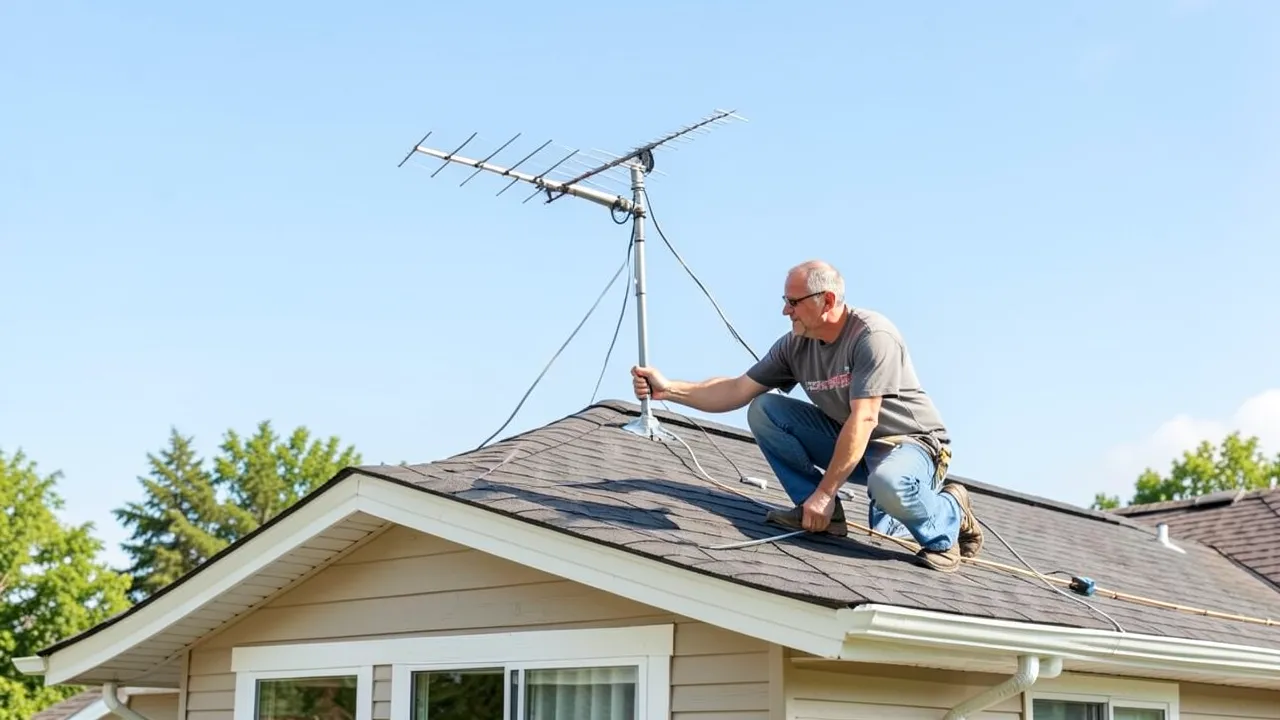
Outdoor mounting usually gives the best result
An outdoor aerial generally receives a cleaner signal than one placed in a loft, because it is less affected by roofing materials. It also tends to perform better during bad weather or when the signal is marginal. For many homes, an outdoor aerial remains the most reliable option.
If your home has a more complex setup, you may also find guidance on Add UK phone extensions without ruining broadband speed useful when planning cables and shared household wiring.
Do not overlook cables, amplifiers, and interference
The aerial itself is only one part of the system. Poor-quality cable, loose connectors, or badly chosen amplifiers can undo the benefits of a good aerial.
Use proper cabling and connectors
A well-made aerial cable helps protect your signal from loss and interference. Cheap or damaged cable can cause pixelation, sound dropouts, or complete signal failure. Connectors should be secure and suitable for outdoor use where needed, especially if the cable runs through exposed areas.
Use amplifiers only when they are genuinely needed
An amplifier can help when the signal is weak, but it cannot create quality that is not already present. If the aerial is aimed badly, or if interference is the real problem, amplification may not solve it. In some cases, it can even worsen performance by boosting noise. The best solution is the one that addresses the actual fault, not just the symptom.
A practical checklist for making the final choice
Before you buy, compare your likely options against the realities of your home and viewing setup. That approach usually leads to a better long-term result than choosing by price alone.
- Identify your local transmitter direction and expected signal strength.
- Decide whether an outdoor or loft installation suits your property.
- Match the aerial type to your location: grouped, wideband, or high-gain.
- Check whether you need support for one TV or several rooms.
- Factor in cable quality, connectors, and any amplifier requirements.
- Think about access for maintenance and weather exposure.
- When in doubt, arrange a professional signal assessment.
A better reception choice starts with the right fit
A TV aerial should be chosen for performance in your specific home, not for appearance alone or for an advertised specification that sounds impressive. When you assess local reception, compare aerial types, and think about installation details, you give yourself the best chance of a stable picture and fewer interruptions. A well-matched aerial often outperforms a more expensive but poorly suited one.
If you want dependable TV reception, focus on fit, placement, and system quality. Those three factors usually matter more than brand names or marketing claims, and they are the foundation of a setup that works well day after day.